



















/644/root1689584773866194.png)











/658/root1698303735645756.png)
/626/root1675849288150039.png)
/52/root1627538811995204.png)
/56/root1627982726396428.png)
/54/root1627538827703772.png)

/644/root1694768669304217.png)
/58/root1627538886162591.png)


Chery Automobile Co., Ltd. ("Chery Auto" or "the Company") continues to advance its climate transition in support of its long-term net-zero targets. The Company integrates its climate strategy into business development and value chain management and advances its net-zero targets through clean technology investment, energy mix optimization, operational energy efficiency improvements, product portfolio transformation, and supply chain collaboration. The Company also continues to strengthen its energy management system and enhance energy data monitoring and performance assessment to support the low-carbon transition of its own operations and entire value chain.
Net-Zero Transition Plan
I. Vision and Goals
Chery Auto fully recognizes the urgent challenges posed by climate change and supports the Paris Agreement goal of pursuing efforts to limit the increase in the global average temperature to 1.5°C above pre-industrial levels. The Company has integrated its climate strategy into its core business planning and established long-term targets to achieve net zero in its own operations by 2037 and across its entire value chain by 2047, progressively decoupling business growth from greenhouse gas emissions.
In support of these targets, the Company is advancing the transition to net zero across its own operations while progressively establishing an emissions reduction system covering the entire value chain. Its actions focus on the transition to new energy products, investment in low-carbon technologies, and supply chain decarbonization, continuously strengthening its ability to address climate change and advance the low-carbon transition.
II. Clean Technology Investment
The Company has established a time-bound and quantified clean technology investment target to implement the transition plan. In 2025, the Company invested approximately RMB 4.6 billion in clean technology research and development. For 2026, the Company has set a clean technology research and development investment target of no less than RMB 8 billion. The investment will focus on diversified powertrain technologies, including hybrid, battery electric, and clean fuel technologies, as well as core areas such as batteries, electric motors, and electronic control systems, providing financial and technological support for the implementation of the transition plan.
III. Planned Key Actions and Decarbonization Levers
1. Own Operations (Scope 1 and Scope 2)
Optimizing the energy mix. The Company focuses on expanding the use of renewable energy such as photovoltaic and wind power and advancing the development of factories that are progressively reducing carbon emissions and improving resource efficiency. As of the end of the reporting period, the renewable electricity usage ratio at the Company’s vehicle manufacturing bases reached 52.77%, while the Dalian Plant had achieved 100% renewable electricity use. The Company’s grid-connected photovoltaic capacity reached 281.92 MW. By 2030, the Company plans to increase the renewable electricity usage ratio at its vehicle manufacturing bases to 80%. The Company also monitors developments in emerging clean energy technologies as part of its long-term technology reserve and strategic research, rather than treating them as primary decarbonization levers under the current transition plan.
Improving energy efficiency. The Company implements multidimensional energy-saving upgrades across key production processes, including painting, welding, and stamping. These measures include variable-frequency motor upgrades, compressed air system retrofits, dryer upgrades, boiler operation optimization, and the adoption of high-efficiency LED lighting. In 2025, the relevant energy-saving technical renovation projects saved 16,808.08 MWh of energy, reduced carbon dioxide emissions by 8,852.05 tonnes, and reduced energy costs by RMB 11,580.4 thousand.
Strengthening digital energy management. The Company has established an intelligent energy management system (EMS) platform to collect energy data in real time throughout the production process. Artificial intelligence algorithms and digital twin technologies are used to dynamically optimize energy allocation and conduct predictive scheduling, continuously improving refined energy management.
2. Value Chain (Scope 3)
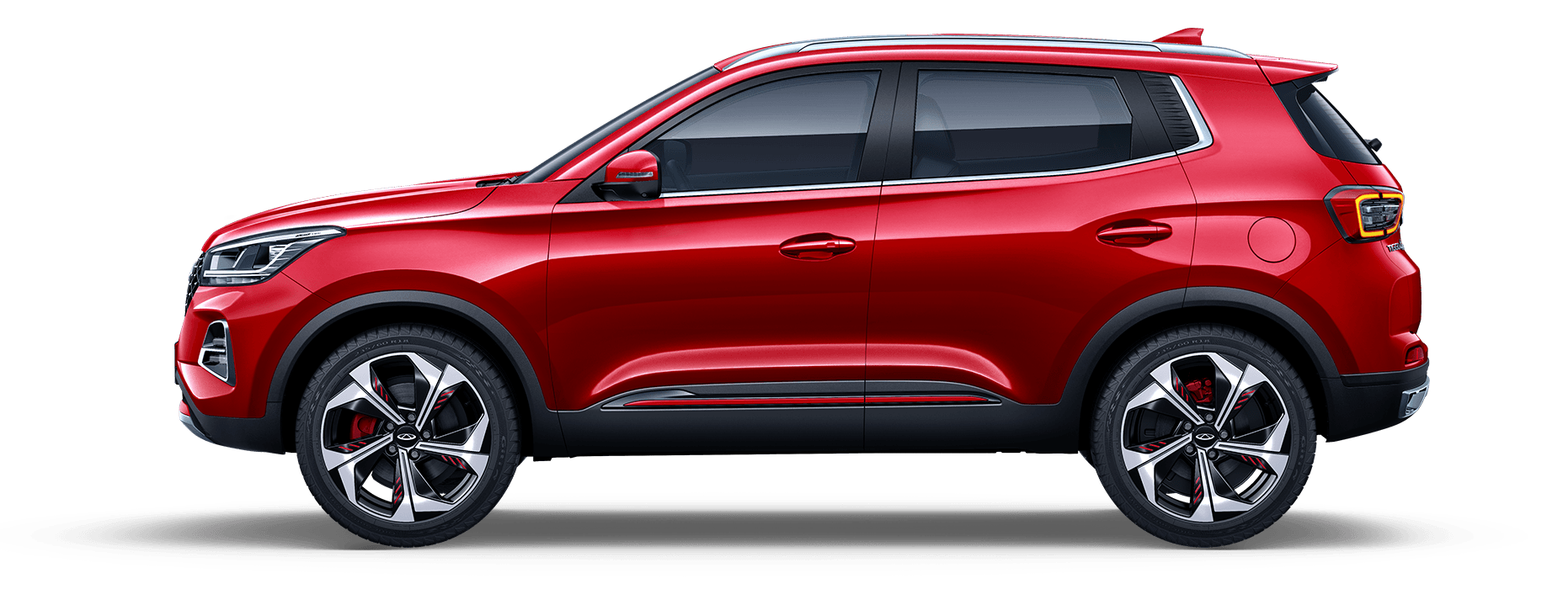
Advancing the transition to new energy products. Through coordinated development across multiple brands, the Company has established a comprehensive new energy vehicle portfolio covering the mainstream price range of RMB 100,000 to RMB 400,000, including sedans, SUVs, and premium off-road vehicles. New energy vehicles accounted for more than 90% of the new products launched in 2025. Annual new energy vehicle sales reached 826.5 thousand units, accounting for 31.41% of total vehicle sales, thereby accelerating the substitution of high-emission internal combustion engine vehicles.
Deepening eco-design and circularity. The Company has established an integrated automotive carbon footprint data mechanism covering the entire value chain and developed a life cycle assessment (LCA) carbon emissions analysis system. Life cycle carbon footprint accounting has been completed for 100% of models currently on sale, providing a data foundation for identifying emissions hotspots and implementing targeted emissions reduction measures. The Company obtained China’s first certificate for "China-EU Carbon Footprint Data Mutual Recognition." The Company incorporates recyclability and reusability considerations into product development and promotes the use of recycled materials. The overall vehicle material recoverability rate has reached 95%, significantly reducing resource consumption and environmental impacts throughout the vehicle life cycle.
Strengthening supplier capacity building and evaluation. Through the Global ESG Advisory Group, the Company provides suppliers with technology guidance and consulting services to help address technical challenges associated with the low-carbon transition. Environmental and low-carbon requirements are incorporated into the supplier management system through the Supplier Code of Conduct and other governing documents. The Company has also established a environmental performance evaluation mechanism and applies the results to supplier relationship management. Suppliers with strong environmental performance are given priority in cooperation, while suppliers that fail to meet the relevant requirements are subject to phase-out in accordance with the Company’s supplier management policies.
At the 2025 Supplier Conference, the Company launched the net-zero initiative entitled "Carbon Exploration · Driving the Future — Jointly Building a Green Supply Chain," setting out 12 actions, including goal co-establishment and technology sharing. In 2025, the Company provided carbon management training to 95 suppliers and conducted renewable electricity surveys covering 138 suppliers. By 2030, the Company aims for its core tier-1 vehicle manufacturing suppliers to achieve a renewable electricity usage ratio of no less than 60%.
Optimizing the low-carbon transportation system. The Company continues to increase the use of new energy freight vehicles within its logistics system and has fully adopted electric forklifts, tractors, and other clean energy equipment for in-plant logistics. For waterway transportation, LNG-powered vessels have been piloted on selected routes along the Yangtze River to reduce emissions from conventional waterway transportation. Through its logistics digital intelligence research institute, the Company has developed logistics optimization models to systematically improve transportation modes and organization. The Company also continues to advance road-to-rail and road-to-waterway modal shifts. Railway and waterway transportation currently account for nearly 50% of total transportation volume.
IV. Stakeholder Engagement
The Company establishes a multi-tiered mechanism to gather input and support the achievement of the transition plan across the value chain, industry, and society.
Value Chain. The Company works with supply chain partners through supplier conferences, carbon management training, renewable electricity surveys, and the Global ESG Advisory Group. The Company has also implemented a hybrid technology open-source initiative and established an open innovation incubation system encompassing open-source collaboration, joint research and development, and talent co-development, providing technical and capacity-building support to value chain partners.
Industry Peers or Relevant Associations or Initiatives. The Company actively participates in the development and revision of national, industry, and association standards. Through standard-setting and industry collaboration mechanisms, it works with industry peers and relevant associations and initiatives to advance standardization and the low-carbon transition in key areas such as electrification, intelligent technologies, and decarbonization.
Government, Public Sector or Civil Society. The Company participates in relevant activities organized by the United Nations Global Compact (UNGC) and the International Union for Conservation of Nature (IUCN) and works with international partners to advance Nature-based Solutions (NbS). These activities facilitate dialogue and cooperation on climate transition, emissions reduction, and low-carbon development. The Company supports China’s goals of peaking carbon emissions before 2030 and achieving carbon neutrality before 2060, as well as the climate objectives of the Paris Agreement. The Company’s climate action case was selected for inclusion in the 2025 Corporate (Park) Climate Action Case Collection organized by the Center for Environmental Education and Communications of the Ministry of Ecology and Environment.
V. Assessment of Social Implications
The Company assesses the potential social implications of the low-carbon transition for employees, supply chain partners, and communities. During the reporting period, the Company provided job-transition training for industrial workers and established a cross-business talent mobility mechanism, offering skills development and career support to employees potentially affected by the transition.
Within the supply chain, the Company provides capacity-building programs through the Yunxuefang online learning platform, supplier benchmarking visits, and supplier technology exhibitions. These programs help supply chain partners improve their management and technical capabilities and strengthen their ability to adapt to the low-carbon transition.
Energy Management System and Actions
The Company’s energy management system provides the governance, data, and capacity foundation for the decarbonization actions across its own operations described above. Chery Auto has established a three-tier energy management structure under the supervision of the Board of Directors and formulated governance documents including the Energy Management Manual and the Energy Usage Management Measures to standardize energy use, performance monitoring, and energy-saving technical renovations. As of the end of the reporting period, six vehicle production bases in China had obtained ISO 50001 certification for their energy management systems.
I. Energy Audits and Digital Management
The Company regularly conducts energy audits and energy use assessments. Through its intelligent energy management system (EMS) platform, the Company collects, analyzes, and monitors energy data from production processes. Big data analytics and predictive algorithms are used to identify energy-saving potential and provide data support for energy allocation optimization, implementation of energy-saving projects, and performance tracking.
II. Energy-Saving Targets and Performance Assessment
The Company establishes quantified annual energy-saving targets. For 2025, it set a target to reduce average comprehensive energy consumption per vehicle by 5% against the 2023 baseline. The Company applies the Energy Saving Management and Technical Project Proposal and Implementation Control Procedures to standardize the proposal, implementation, and assessment of energy-saving projects.
The Company incorporates energy efficiency improvement into employee capacity building for energy and environmental management. In conjunction with production requirements and energy-saving practices in production and operations, the Company provides energy conservation and efficiency training to safety and environmental management personnel and frontline employees. The training covers energy use management requirements, identification of key energy-consuming activities, energy-efficient operating practices, and examples of energy-saving improvements. It helps employees understand the relationship between their work activities and energy consumption and strengthens their ability to identify and implement energy-saving opportunities. In 2025, the Company organized nine environmental protection-themed training sessions, continuously strengthening employee awareness of energy conservation and energy consumption reduction.
